The global door market is famously fragmented, so putting together a shortlist of manufacturers is usually harder than it should be. This guide brings together ten of the leading door manufacturers and suppliers in 2026, spanning entry doors, interior doors, industrial doors, and aluminum systems. The list blends global market leaders with the aluminum door manufacturers that matter most for international sourcing, and each entry includes the facts buyers actually need: location, specialty, and scale. Whether you need a single patio door or doors for an entire development, the list below gives you a starting point and a way to compare. The order is a reference ranking rather than a strict one, because the right supplier always depends on your product type and target market.

How These Manufacturers Were Ranked
The ranking weighs four things: market presence and brand recognition, production scale and capacity, product range, and global reach. For a buyer sourcing a specific product — say, thermal-break aluminum doors for a residential development — a manufacturer with deep expertise in that product can be more useful than a larger generalist, which is why this list includes both categories.
1. ASSA ABLOY
Headquartered in Sweden, ASSA ABLOY is widely regarded as the world's largest door and lock manufacturer. It leads the market in door systems, access solutions, and smart locking technology, with brands such as Yale and HID under its umbrella. It also owns a large portfolio of door hardware and access brands, giving it unmatched reach across security applications. Its global scale and security focus make it the default benchmark when buyers think about entry and access doors.
2. Hörmann Group
Hörmann is Europe's leading door manufacturer, based in Germany and founded in 1935. It covers industrial doors, residential doors, and fire-rated doors, and remains family-owned despite its global scale. The company operates dozens of production facilities, primarily across Europe and North America. Buyers looking for commercial, garage, or fire door systems most often encounter Hörmann near the top of any shortlist.
3. JELD-WEN
JELD-WEN is a US-based manufacturer with a truly global footprint, producing interior and entry doors alongside windows. Founded in 1960, it supplies residential and commercial builders across North America, Europe, and Asia, and is one of the most recognizable door brands in the world. Its product line spans interior molded doors, entry doors, and a growing range of energy-efficient exterior doors.
4. PAIYA Windows & Doors
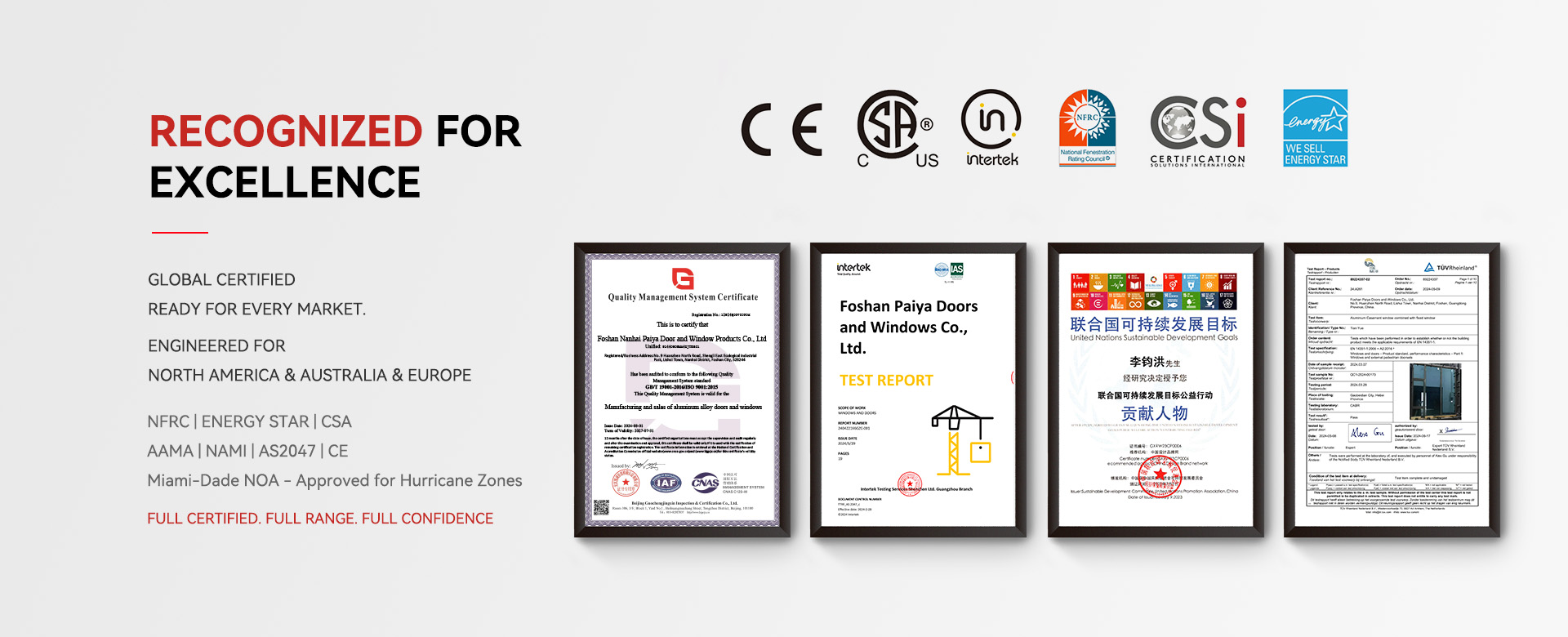
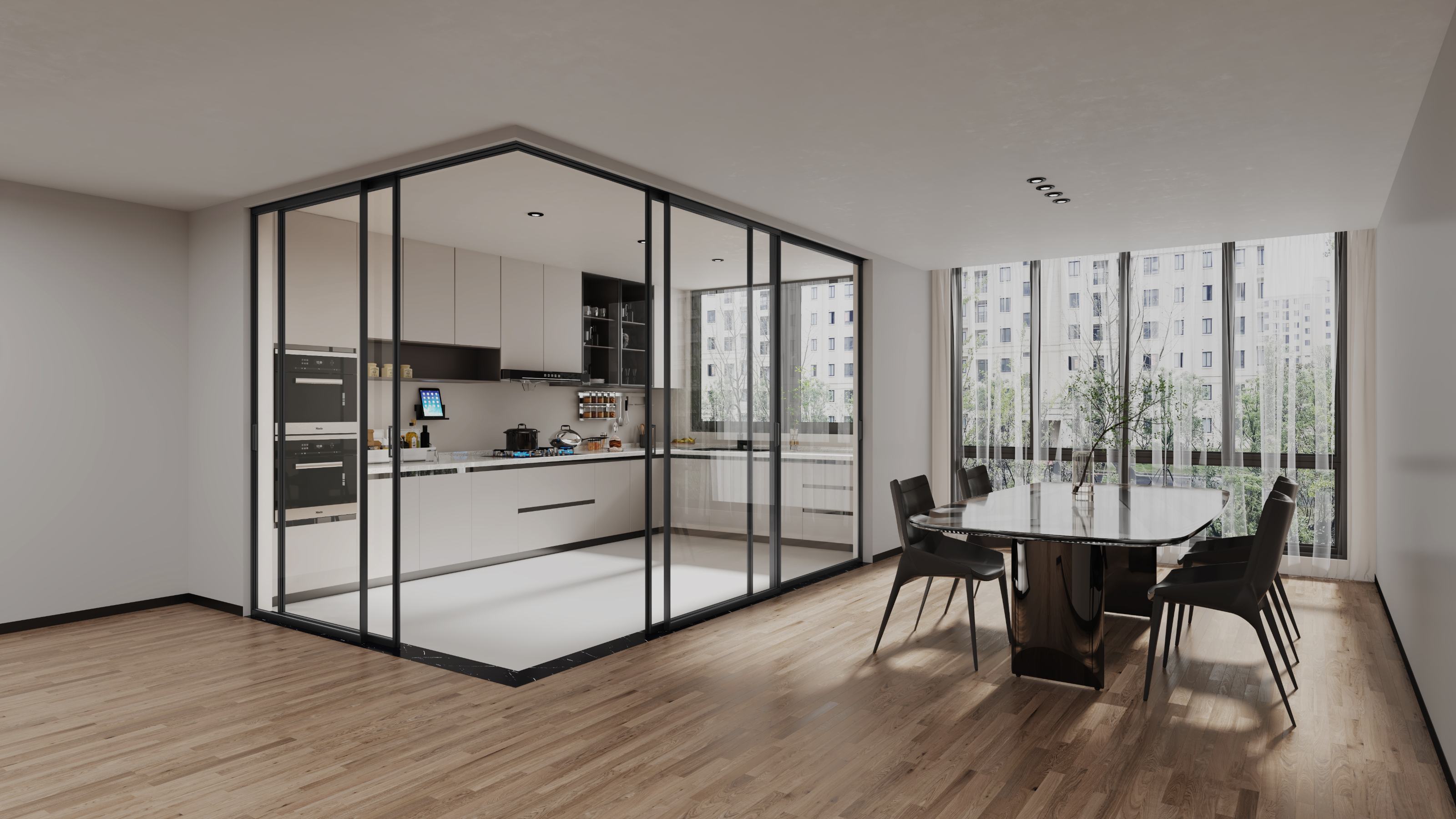
PAIYA, operated by Foshan Nanhai Paiya Door & Window Products Co., Ltd., has been manufacturing aluminum doors and windows for 36 years. From a 300,000-square-meter smart factory in Foshan, PAIYA supplies thermal-break doors and windows to projects across the USA, Canada, Australia, the Middle East, and Southeast Asia. Its door range covers folding doors, sliding doors, and glass swing doors, and its products are designed to meet NFRC, CSA, and AS2047 standards. The doors themselves are built around thermal-break aluminum profiles with Low-E insulated glass, multi-layer EPDM sealing, and hidden drainage, with options for integrated insect screens, smart control, and color-matched frames and hardware. For buyers sourcing aluminum doors from China, PAIYA combines large-scale production with flexible customization in profile, glass, hardware, and finish. Learn more about PAIYA's manufacturing experience and its certified products.

5. Masonite International
Masonite is a leading North American manufacturer of interior and exterior doors, founded in 1925. Its strength lies in molded and flush interior doors at scale, making it a staple supplier for residential builders and distributors. It is often the go-to supplier when builders need consistent, cost-effective interior doors in high volume. It has manufacturing and distribution across North America, Europe, and beyond.
6. LIXIL Corporation
LIXIL is a Japanese building materials group whose portfolio includes doors, windows, and sanitaryware. Its brands include INAX, American Standard, and Grohe, and it is one of the largest building products companies in Asia. In doors and windows, it focuses on Japan and Asia, while its sanitaryware brands give it worldwide consumer recognition. Buyers encounter LIXIL most often through its residential door and window systems and its global plumbing brands.
7. YKK AP
YKK AP is the aluminum building products division of Japan's YKK Group. It produces aluminum doors, windows, and curtain-wall systems, with a strong presence in high-rise and commercial projects across Asia. Its products are frequently specified in facade and commercial projects where aluminum systems are standard. For specifiers evaluating premium aluminum systems, YKK AP is a frequent point of comparison.
8. Andersen Corporation
Andersen, founded in 1903 and based in Minnesota, is one of America's best-known window and door brands. Its range spans windows, patio doors, and entry doors for the residential market. Its window and patio door lines are a common benchmark for quality in North American homes. The company is known for strong brand recognition and a broad North American dealer network.
9. Pella Corporation
Pella, founded in 1925 and based in Iowa, competes closely with Andersen in the US residential market. Its product line covers windows and doors, including patio and entry doors, with an emphasis on design and energy efficiency. It operates its own retail and dealer network across the United States.
10. Cornerstone Building Brands
Cornerstone Building Brands is the largest exterior building products manufacturer in North America, formed from a series of mergers completed in 2018. It supplies doors, windows, vinyl siding, and metal building components, making it a one-stop supplier for many large builders. Its breadth makes it a convenient single source for builders ordering across multiple product categories.
Notable Specialists Worth Knowing
A few companies do not make the top ten in overall scale but lead their specialty: Sanwa Holdings in commercial and industrial doors, Schüco and Reynaers Aluminium in aluminum window and door systems, VELUX in roof windows and skylights, Therma-Tru in entry doors, and Dormakaba and Allegion in access control and security hardware. Specialists often win on a narrow specification — a fire rating, a curtain-wall system, or a skylight — where a generalist's broader range is less relevant. If your project is highly specific, one of these specialists can be the better fit than a generalist.

How to Choose the Right Manufacturer for Your Project
The ten names above fall into three broad groups, and knowing which group you need is often more useful than the exact ranking.
|
What to compare |
Global generalists |
International system brands |
PAIYA |
|
Product focus |
Doors in wood, steel, and composite |
Aluminum system design, fabricated by partners |
Thermal-break aluminum doors and windows |
|
Customization |
Standard product lines |
High, but through licensed fabricators |
High, directly from the factory |
|
Certifications |
Vary by market |
Strong at the system level |
NFRC, CSA, and AS2047 options |
|
Sourcing route |
Through distributors |
Through fabricators |
Direct factory contact |
|
Export flexibility |
Varies |
Varies |
Strong across North America, Australia, the Middle East, and Southeast Asia |
If you are buying standard interior wood doors in North America, a generalist is hard to beat. If your specification names a particular aluminum system, an international system brand makes sense. But if you need thermal-break aluminum doors made to your drawings, with direct factory communication and certification support, a specialist manufacturer like PAIYA is usually the most efficient route.
Why Buyers Choose PAIYA for Aluminum Doors
For aluminum door projects specifically, PAIYA's advantages come down to a few practical points:
- Direct factory sourcing — 36 years of manufacturing and a 300,000-square-meter factory mean direct pricing and direct communication, without a middle layer of distributors or fabricators.
- A full aluminum door range — folding, sliding, and glass swing doors, plus aluminum-MDF wood doors, all built on thermal-break profiles.
- Performance built in — Low-E insulated glass, multi-layer EPDM sealing, hidden drainage, and options for insect screens and smart control.
- Certified to target markets — NFRC, CSA, and AS2047 options make compliance easier for North America and Australia.
- True customization — profile, glass, hardware, and finish can be adjusted, including color-matched panels, frames, and hardware for a seamless look.
- Project support — technical drawings, node details, installation guidance, and a 10-year warranty.
Which Manufacturer Best Fits Your Supply Chain?
Different buyers need different things from a door manufacturer, and matching the manufacturer to your role in the supply chain saves more time than chasing the biggest name.
For Distributors and Wholesalers
If your priority is stable margins and reliable restocking, choose a manufacturer with large production capacity and proven export experience. You need consistent quality across container loads, competitive wholesale pricing, and marketing support. A manufacturer like PAIYA — with a 300,000-square-meter factory, 36 years of manufacturing, and exports to North America, Australia, the Middle East, and Southeast Asia — fits this profile, while the global generalists work better for buyers of standard wood or steel doors in regional markets.
For Commercial Contractors and Developers
For multi-unit developments, supply reliability and certification matter most. Choose a manufacturer that can document performance — NFRC, CSA, or AS2047 — and provide technical drawings, node details, and installation guidance. This is where an aluminum door specialist can out-perform a generalist: the door is built to your drawings and certified to your market rather than adapted from a standard product line.
For Architects and High-End Designers
When the door is part of the design, look for customization and finish control: slim frames, color-matched panels, frames, and hardware, and options such as integrated screens and smart control. Specialist aluminum brands and international system brands both serve this need. The difference is that a direct factory iterates faster on custom details than a system brand routed through licensed fabricators.
How to Compare Manufacturers for Your Business
For Project Buyers: Define Acceptance Before Production
Send the same purchasing brief to every candidate — drawings, dimensions, quantities, frame color, glass specification, and delivery stages. Ask what is included in the fabrication scope and what requires separate approval. Confirm that certification documents refer to the door being ordered, not another product in the catalog, and agree on packing and labeling before production starts.
For Wholesalers: Compare Usable Supply and Total Cost
A wholesale quote should state the minimum order quantity, lead time, and which items are in stock versus made to order. Compare quotations on the same scope, and account for packing, inland transport, freight, insurance, and import duties on top of the unit price. Establish inspection and claims procedures up front — a lower unit price matters less if damage and nonconformity are hard to resolve.
For Distributors: Evaluate the Range You Will Support
Confirm the current product range, sample references, authorized images, and technical information you will use in your own market. Check the warranty and after-sales policy, including spare parts and technical response. If territory or exclusivity matters, document it rather than assuming it — the real question is whether the manufacturer supports your sales model over the long term.
A Quick Verification Checklist
Once you have a shortlist, compare candidates on five checks. First, confirm production scale and capacity, which determines delivery reliability for large orders. Second, ask for certifications relevant to your market — NFRC, CSA, AS2047, CE, or ISO 9001 — rather than relying on claims. Third, review technical support: professional drawings, node details, installation guidance, and export packaging all lower project risk. Fourth, check warranty and after-sales policy, since spare parts and technical response matter long after delivery. Fifth, test communication directly, because a responsive contact who provides clear documentation early usually signals how the whole project will run. Match the checks to your product type — an aluminum door buyer will weigh certifications and customization more heavily than a buyer of standard interior doors.
Build Your Shortlist, Then Verify
The right manufacturer is rarely the biggest name on the list. It is the one whose scale, certifications, product range, and support match your market and product type. Use this ranking as a starting point, then narrow to three candidates and compare them on the same criteria. Comparing three candidates on the same five checks is almost always faster and more reliable than chasing the single biggest name.
If you are sourcing thermal-break aluminum doors for North America, Australia, the Middle East, or Southeast Asia, contact PAIYA for technical drawings, certification documents, and a customized quotation.