How to Choose Between Folding Doors and Sliding Doors
Folding doors and sliding doors are the two most popular ways to open a home onto a balcony, patio, or garden, and at first glance they look similar. But they solve different problems, and the real difference is not style — it is how much of the opening you can actually open. This guide starts from your situation and gives a clear recommendation for each case, with the reason behind it. PAIYA manufactures both systems in its 300,000-square-meter factory, so the choice comes down to which one fits how you actually want to live.
The One Question That Decides It
Before comparing any specifications, answer one question: how wide do you want the opening to be?
A folding door stacks its panels to one or both sides, so nearly the entire opening becomes a clear passage. A sliding door glides along a track, which means one panel slides behind the other and only about half of the width is open at any time. If you want the whole wall to disappear, that single difference usually points you to a folding door. If you are happy with a half-width opening and value simplicity, a sliding door is likely the better fit. Think about it in daily use: with a folding door, a family can walk in and out freely during a barbecue, while a sliding door lets one person pass while the other panel stays fixed. Everything else — sealing, weather resistance, cost — refines this first decision rather than replacing it.
Head-to-Head Comparison
|
Factor |
Folding door |
Sliding door |
|
Opening width |
Nearly the full wall |
About half the width |
|
Space needed |
Panels stack to the side |
None — glides on a track |
|
Sealing |
Strong with multi-layer joints |
Good — depends on the track seal |
|
Weather resistance |
Strong with hidden drainage |
Strong; check wind-load rating |
|
Cost |
Generally higher |
Usually more economical |
|
Best for |
Full indoor-outdoor opening |
Wide views, small spaces, budgets |
Choose a Folding Door If You Want the Whole Wall Open
If your goal is to connect a living room to a terrace, garden, or pool area, a folding door is the recommendation. The reason: the panels stack neatly to the side, so you get the widest clear opening of any door type, with no fixed panel left in the way.
It also suits people who entertain often, because the open doorway becomes an uninterrupted passage between inside and outside, with no frame dividing the view. The tradeoff is that you need some wall or corner space for the panels to stack, and folding systems generally cost more than sliding ones. When comparing folding doors, look for multi-layer sealing at the folding joints — that is exactly where drafts and leaks appear in cheaper designs. If insects are a concern, some folding systems can be fitted with an integrated insect screen, so you can keep the wall open for air without letting bugs in.
Choose a Sliding Door If Space or Budget Matters More
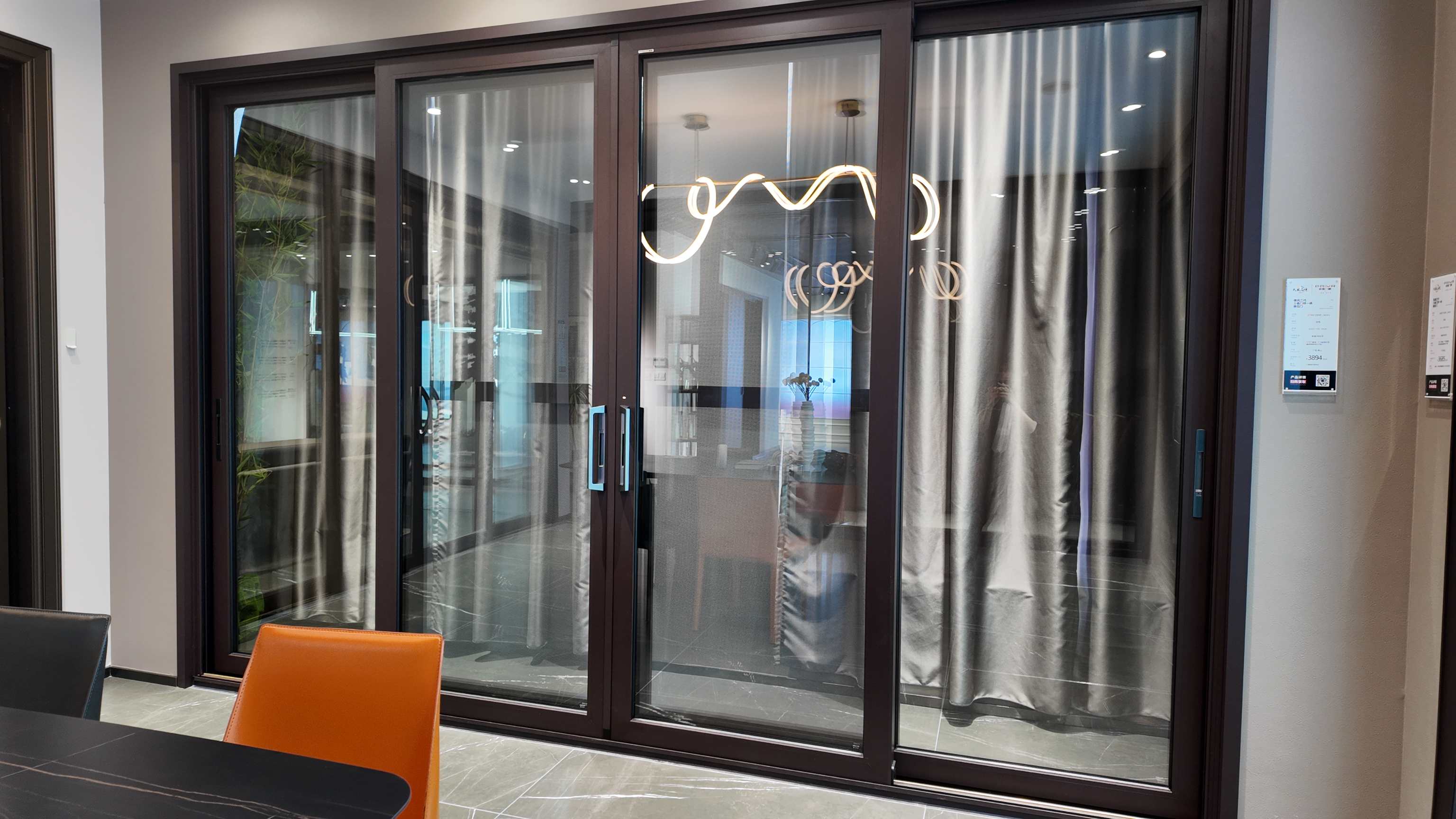
If the room is small, or furniture sits close to the opening, a sliding door is the practical recommendation. The reason: the panel slides within the frame and never swings or stacks into the room, so you keep every inch of floor space.
Sliding doors are also the natural choice when you want the widest possible view. A slim-frame sliding door can carry a single panel up to 3 meters wide and 3 meters high with only a thin visible frame, keeping the glass area — and the view — as large as possible. It is also the easier of the two to operate day to day, since a single panel moves on smooth rollers with little effort. And if budget is a concern, a sliding door is usually the more economical option of the two. The main limits are that you open only half the width, and the seal along the track is not quite as tight as a well-sealed folding or swing door.

What Your Climate Changes
Climate affects both choices more than people expect. In coastal or high-wind areas, a large glass panel needs real wind-load engineering — look for a top anti-sway roller and a high-load bottom system that keeps big panels stable in strong gusts. In rainy regions, hidden drainage matters so water drains away quickly without backflow. In hot, sunny climates, a thermal-break frame and Low-E glass keep the interior cooler and cut air-conditioning costs.
The good news is that you do not have to choose between weather performance and the opening style you want. PAIYA offers both its folding and sliding systems with thermal-break profiles and Low-E insulated glass, so the deciding factor is usually the opening width and available space rather than weather performance. In humid climates, a well-sealed thermal-break frame also helps reduce condensation on the glass.
Sealing and Weatherproofing: What to Check
Whatever you choose, check the same fundamentals. The frame should be primary aluminum such as 6063-T5, with a thermal break and enough profile thickness to stay rigid. Seals should be automotive-grade EPDM gaskets, and the drainage should be hidden rather than relying on exposed caps.
The details differ slightly by type. For a folding door, focus on the sealing at the folding joints — multi-layer sealing there is what keeps wind and rain out when the door is closed. For a sliding door, focus on the track seal and the drainage channel, since that is where water and air most often enter. If your market requires verified performance, choose a certified system tested to NFRC, CSA, or AS2047 standards rather than trusting a claim.
Extras That Can Change Your Decision
Two extras can tip the balance between folding and sliding. The first is an integrated insect screen, which matters if you live in a bug-prone area or own pets; a fine stainless-steel mesh keeps fresh air moving while keeping insects out, and heavier mesh grades suit high-traffic or pet households. The second is smart control, which is more common on sliding systems and lets you open or close the door with a control system rather than by hand. Neither should drive the initial choice, but both are worth confirming before you finalize the order.
Common Mistakes to Avoid
- Choosing by looks without deciding how wide you actually need the opening.
- Ignoring wind load in coastal or high-rise locations.
- Skipping the joint seal on a folding door or the track seal on a sliding door.
- Choosing single glazing to save money, then paying for it in comfort every year.
- Forgetting to check drainage before the door is installed.
A Quick Way to Decide
Want the wall to disappear on warm days? Choose a folding door. Want the widest view and free floor space, with a simpler and more economical system? Choose a sliding door. If you are still torn, look at both options in a similar-sized opening — the difference in opening width usually makes the answer obvious. Once you have made that call, verify the frame, glass, sealing, and certification, and the rest falls into place.
With 36 years of manufacturing experience, PAIYA Windows & Doors configures both systems to your climate, market, and budget. To compare folding and sliding options for your project, contact PAIYA for technical drawings, glass specifications, and a customized quotation.